
The Cultured Club
The group has an elitist sound, but its members are jewelry buyers who choose "cultured," or lab-grown, diamonds over mined gems. Expect to see more of them, this wedding season and beyond.
Some observers are calling this the dawn of a "new diamond age." Synthetic diamonds are coming into their own, in response to technology, the economy and the public's taste.
Color Is In
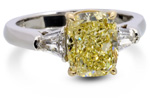 |
Movie stars and others in the public eye are flashing colored diamonds, often called fancies. Elton John was seen wearing a 36-carat yellow diamond cross. Eddie Murphy proposed with a canary yellow diamond ring, and Tom Cruise wore a "sizeable" bluish white diamond at his own wedding. Marion Cotillard accepted an Oscar wearing necklaces of light and dark brown diamond beads.
Popular interest in colored diamonds is piqued, and synthetic diamonds are piggybacking on that interest. Natural fancies are extremely rare and prohibitively expensive for most jewelry buyers, but lab-grown gems break through those barriers.
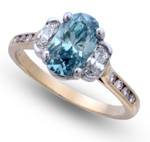 |
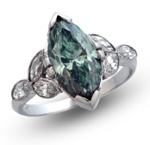
It so happens that it's very difficult, and therefore very expensive, to produce a white (or colorless) diamond in the lab. That will change as technology improves, but right now pinks, yellows, blues, greens and purples are easier to grow, so diamonds in those colors abound. Not all colors are possible, but there's rainbow enough to entice shoppers looking for something colorful and unusual, and with the matchless caché of diamond.
 |
Meanwhile, sellers of natural diamonds also benefit from the popularity of color. Diamonds with a yellow cast used to be overlooked as off-color, not good enough for fine jewelry. Now canary yellow is a choice. Diamonds with a brownish cast were once relegated to industrial use. Now the brown is renamed "cognac" and it's a gem color option with all the others.
Marketing & Price
Diamond labs are not hiding their gems' origin but advertising it. Gemesis, a major diamond producer, had a 10-page spread in Town & Country earlier this year. Retailers say many shoppers, far from being put off, are fascinated by the technology involved.
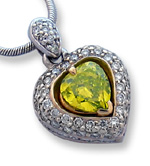 |
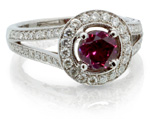
Diamond growers flaunt their color. Then they compare their prices to the astronomical cost of natural fancies worn by the stars, and customers are delighted at the bargains. For instance, one comparison showed BlueNile.com selling a natural 1.5-carat yellow-green diamond for $375,000, while lab-made colored diamonds from Gemesis or Chatham retailed for $2,000-$4,000 per carat.
There are more diamond growers today than 10 years ago, so the market in lab-grown diamonds is increasingly competitive. Although synthetic diamonds have not (yet?) reached the rock-bottom prices predicted a few years ago, there is a significant price difference between natural and synthetic diamonds. The current economic downturn also plays a part in making lab-growns financially more appealing than mined diamonds.
 |
You might say that lab-grown diamonds have reached critical mass. The respected Gemological Institute of America, after long refusing to grade synthetic diamonds, last year decided to issue grading reports for synthetics. This GIA "seal of approval" goes far in making lab-grown gems serious contenders in the diamond jewelry market.
A Natural Advantage?
Even DeBeers, which has for decades controlled access to mined diamonds, is scared by the proliferation of synthetic diamonds. In an effort to firmly hold the distinction between natural and lab-grown diamonds, it has developed technology — albeit expensive technology — to help jewelers recognize synthetic diamonds.
Some large retailers, like Tiffany or the internet store BlueNile.com, still carry only mined diamonds. But the longer synthetic gems are around, and as production runs yield more stones at larger sizes, the more a traditional resistance to them seems to be breaking down. For many customers, natural or cultured is a non-issue. It looks like a diamond, acts like a diamond, and in fact is a diamond — so what if it's grown in a lab? As one diamond grower remarked: Whether an orchid comes out of the African jungle or is grown in a greenhouse, it's still a beautiful orchid.
FOR AGENTS & UNDERWRITERS
As synthetic diamonds become increasingly popular, insurers must be extremely careful. The price difference between natural and synthetic diamonds is immense, especially for colored diamonds (fancies).
Never assume a diamond is natural just because the appraisal does not mention synthetic. For a colored diamond, insist on an appraisal that states the stone is either natural or synthetic.
Synthetic diamonds can be difficult to detect. Training and special equipment are necessary. Laser inscriptions on the girdle, identifying the manufacturer, may be concealed when the stone is in a setting. Improperly trained (or dishonest) retailers and appraisers may pass on synthetic diamonds as naturals.
The high cost of lab equipment developed by DeBeers to distinguish synthetic from natural diamond puts that equipment beyond the means of most retail jewelers. Therefore, when insuring colored diamonds represented as natural, insist on a Diamond Report from a reputable lab, such as GIA, which employs the best technology available.
GIA is the most respected authority in diamond grading. Not all diamond certificates come from trustworthy labs. See Spotting a Bogus Appraisal for details.
The GIA now grades synthetic diamonds. The heading on the document specifies that the report is for a "synthetic colored diamond," and the description includes the phrase "laboratory grown."
Remember that even a GIA diamond report, whether for a natural or a synthetic gem, is not a substitute for an appraisal. A diamond report does not describe the jewelry as a whole, metal, setting, etc., and it does not give a valuation.
It is important to have a detailed JISO 78/79 (formerly ACORD 78/79) appraisal from a competent and experienced jeweler who is a Graduate Gemologist (GG) and a Certified Insurance Appraiser™ (CIA).
FOR ADJUSTERS
The price difference between natural and synthetic diamond is immense. An overpayment could run to tens of thousands of dollars or more.
If the appraisal does not explicitly state the diamond is natural, use every means possible to determine whether it is natural or synthetic. Be especially diligent with colored diamonds.
Be sure to scrutinize the appraisal and sales receipt. If the sale price is too good to be true, the gem is probably a synthetic or an imitation (such as cubic zirconia or moissanite).
On a damage claim for a high-priced diamond, always have the piece examined by a qualified gemologist, such as a Certified Insurance AppraiserTM, to determine whether the diamond is natural or synthetic (and to be sure its qualities are as stated in the appraisal).
Inspect the appraisal for terms that mean synthetic, such as grown, created, lab-made, and cultured.
Makers of synthetic diamonds use their names to market their products. Recognizing these names, or working with a jewelry insurance expert who does, could save you tens of thousands of dollars on a claim.
UPDATE!
A California woman has filed a $5 million lawsuit against Jewelry Television (JTV), a home-shopping channel that sells jewelry 24 hours a day. The suit claims JTV sold gems described as rare and expensive red or green andesine labradorites, but the items were actually colorless or yellow common feldspar that had been chemically treated.
The lawsuit is seeking class-action status, estimating that thousands of customers purchased the questionable gemstones.
The lawsuit highlights the dangers of buying jewelry on impulse, or solely on the basis of advertising and hype. Jewelry purchased through shopping channels and internet retailers should signal insurers to be extra cautious. For further discussion of possible scams and questionable valuations from these sources, see TV Shopping for Jewelry and E-Bay Jewelry “Bargains”.
©2000-2024, JCRS Inland Marine Solutions, Inc. All Rights Reserved. www.jcrs.com
Subscribe to Jewelry Insurance Issues
